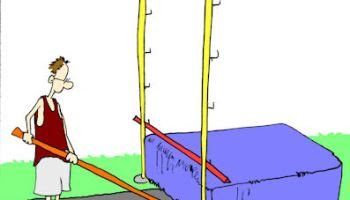
Lowering the bar is the antithesis of what we’re taught. Go
for the gusto. Be number one. Never accept anything less than the best. We’re
told never to settle. I used to believe the same thing, until I discovered that
so-called settling brought me much more than I imagined.
A little anecdotal knowledge here: The times I played the
worst was when I really wanted to play well. Right before a performance, I’d be
running scales and patterns seconds before I hit bandstand. Mind you, sometimes
this can be a good thing, especially if you’re not warmed up or if there are
few musical passages that you’re still not solid on. My situation was
different. I was plenty loosened up physically. It was my mental and spiritual states that were tight and rigid. It was difficult for my creativity to seep
through the cloud of neurosis that was defining my musical existence.
Even career wise, the times I was doing the worst in my
career was when I I really wanted to be a jazz star. I would be on a huge stage
of a major festival playing for a few thousand people, upset about not getting
my due. Sounds insane, I know. The funny thing is that if I had put all of that
negativity aside and had just try to have fun, I would have played better and
possibly put myself in a position to receive more career success.
Today, I’m happy to say that I’m not like that nor do I want
any of that. And consequently, I continue to receive more than I ever had when
I desperately wanted it. Life is funny this way.
Several years ago, I was hanging out with a colleague. Let’s
just say he’s not lacking in the ambition department. During our conversation
he mentioned the typical things ambitious musicians discuss: festivals desired,
promoters whose rosters we want to get on, labels we want to sign us, etc. He
began noticing I had relatively little interest in these things, and he said to
me. “Man, now I see why you’re not affected by any of this stuff. You’ve
basically given up.”
Of course, this made me laugh. I explained that yes, I had
retired my neurotic business obsessions. I wasn’t concerned about playing at
the Village Vanguard, or getting signed to Blue Note, or topping the critics
polls. I was, however, more concerned with having health insurance, saving for
my retirement; and musically speaking, having fun with my musical experiments
and connecting with like-minded people. None of these things will get me on the
cover of DownBeat, on a major festival or a feature in the New York Times. Why? Because this is all
very average stuff. Maybe even stuff that someone who has lowered the bar for
themselves would be concerned with.
And this is fine. My goal is to be average. Having just
enough to do what I need to do. No more, no less. Trying to be great doesn’t
work for me. This is a life lesson that has taken a few decades to learn.
Back to my career-ambitious friend, what he perceived as
settling or giving up, I saw as establishing a solid foundation for obtaining
happiness. Consequently, my goals are low but my spirits are high. Even in terms of
improvisation, I no longer practice to become great, I practice to become
solid. Cover the basics and be done with it. If most people heard me practicing,
they’d think I was an 18-year-old student attending Berklee. I practice ii-Vs
through the keys, patterns, and swinging over standards. Nothing to write home
about.
But I’ve discovered that keeping my musical ambitions within limited
parameters, lowering the bar, if you will, aiming to simply build a solid foundation,
enables me to tap into more under-explored and un-expected territories while
improvising. It's similar to the principle of opposites I often talk about.
- If you want to play fast, practice playing slow.
- If you want a big, robust sound, practice playing soft.
- If you want to be become a great player achieving lots of
notoriety, strive just to be an average, solid player, known by only a few.
You’d be amazed by the results!

 ll